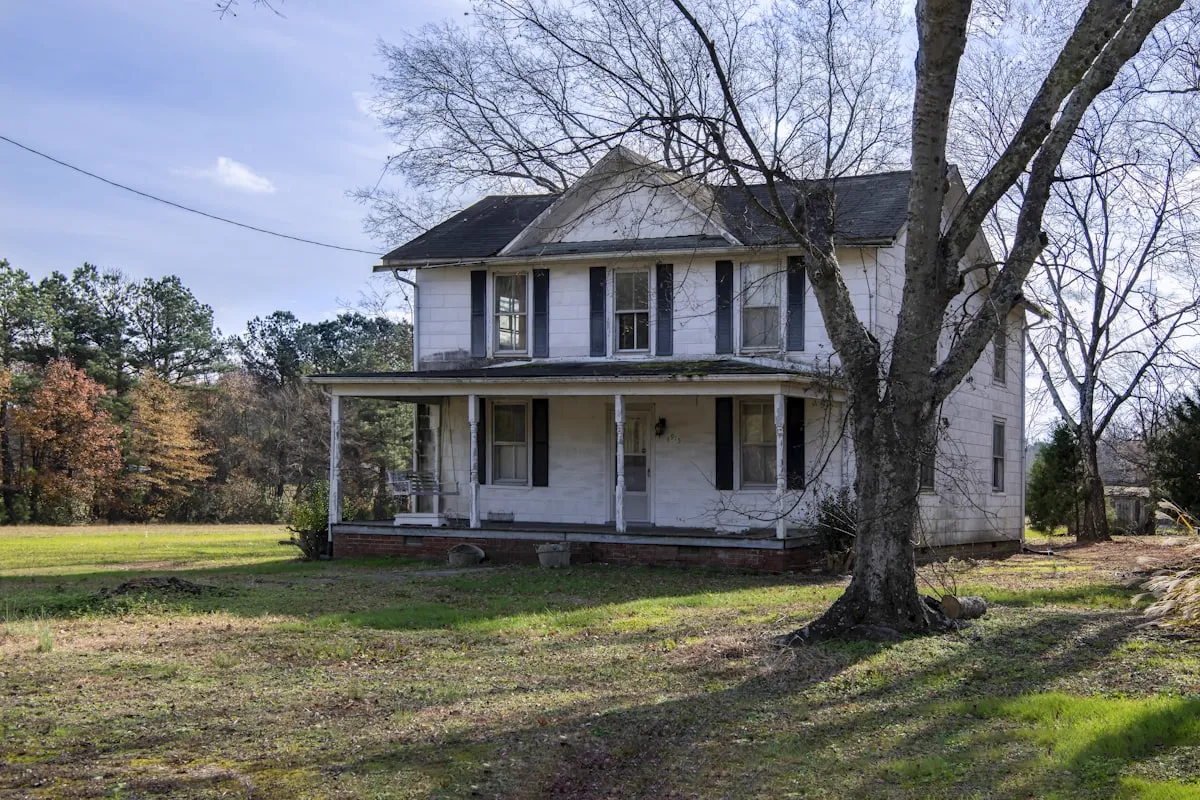
Selling an Inherited House in Tarrant County: What Actually Has to Happen First
Nobody can close on an inherited house until someone has legal authority to sign for the estate. In Texas that authority usually arrives as Letters Testamentary or Letters of Administration, issued by a probate court after the will is admitted or an administrator is appointed. You can often list the house, and even go under contract, while that is in motion. You cannot close without it. How long it takes depends almost entirely on which of four legal paths the estate travels, and that is decided by facts already fixed: whether there was a will, what it says, and whether the heirs agree.
Almost nobody plans this transaction. It arrives with a phone call, and then a house, and then a stack of questions that Google answers mostly with cash-buyer ads. This is the version we wish every family got handed on day one: the actual Texas process in plain English, with the statute cited where the statute is the answer. We are REALTORS® and property managers, not attorneys and not CPAs, and this article stays firmly on the process side of that line. Where a decision touches law or taxes, we say so, and that is your cue to make the call to a professional who can advise on your specific situation.
Start here: the question is authority, not paperwork volume
Every inherited-house sale in Texas turns on one thing. Before a title company will insure a closing, someone has to hold legal authority to sign the deed on behalf of the estate. Until that authority exists, no contract can close, no matter how motivated the family or the buyer.
That authority typically takes the form of Letters Testamentary, when there is a will naming an executor, or Letters of Administration, when there is not and the court appoints someone. A few smaller estates can skip letters entirely through shortcuts we cover below. But the first practical question for any family is not "how do we sell the house." It is "who can sign, and what has to happen before they can."
One piece of good news up front: you usually do not have to wait for everything to finish before going to market. In common practice you can list the property, and even sign a contract, while probate is in progress, as long as closing waits for the letters. Title companies enforce this at the closing table, and a good listing agent builds the timeline around it. Confirm the sequencing for your estate with your probate attorney before you sign anything.
The four paths through Texas probate
1. Independent administration: the normal Texas case
Texas is unusual among states in how light-touch its default probate can be. In an independent administration, the court admits the will, appoints the executor, and then largely steps out of the way. No court approval is needed for most actions after that point (Texas Estates Code §401.006, §402.001).
For a house sale, the practical effect is big. An independent executor whose will gives them the power to sell, what the Code calls a power of sale, can sell estate property with the same authority as a court-supervised representative and without stopping for court approval (§402.052). The Code goes further: when that power exists, the signature of the heirs is not necessary for the buyer to receive full title (§402.053). The executor still owes every heir a fiduciary duty, and an executor who sells against the family's interest answers for it. But the mechanics of the closing do not require rounding up signatures from four siblings in three states.
Independent administration happens two ways: the will names an independent executor, or everyone who stands to inherit agrees on one, even when the will is silent or there is no will at all (§401.002, §401.003). That second route is worth knowing. A family that can agree on one trusted person can often convert what would have been a slow, supervised process into a fast one.
2. Dependent administration: the slow road
When there is no will and the heirs cannot agree, or the court otherwise decides supervision is needed, the estate lands in dependent administration, and the courthouse stays involved at every step. To sell the house, the administrator files an application with the court describing the property and why the sale is needed (§356.251). The court must order the sale. After a buyer is found, the sale gets reported back to the court within 30 days (§356.551), and it only becomes final when the judge signs a decree confirming it (§356.556). That confirmation has the effect of a final judgment.
Every one of those steps has a filing, a docket, and a wait attached. Third-party estimates commonly put dependent administration sales at six months to a year or longer, against weeks for the same sale under an independent executor. No official Tarrant County timeline exists, so treat any specific number as an estimate. The structural point is not an estimate: the same house, sold by the same family, moves at a completely different speed depending on which administration it sits in.
3. Muniment of title: probate without an executor
Texas has a shortcut most states lack. When there is a valid will and the estate has no unpaid debts other than those secured by real estate, the court can admit the will as a muniment of title (Estates Code §257.001). No executor is appointed. No administration opens. The court order itself becomes the missing link in the chain of title, the paper trail a title company walks from owner to owner, and the property passes to the people named in the will.
For a family whose only real task is transferring a paid-off house, this can be the cleanest route available. Whether an estate qualifies is exactly the kind of judgment call that belongs to a probate attorney.
4. Small estate affidavit: narrow, and narrower than people think
The small estate affidavit exists for modest estates with no will: total assets of $75,000 or less, not counting the homestead and exempt property, and only after 30 days have passed since the death (Estates Code §205.001). The limit surprises most families: for real estate, the affidavit can transfer title only to the home the person who died actually lived in, their homestead, and only when it is the sole real property in the estate (§205.006). It does not work for a rental house, a second property, or land. If the estate holds any real property beyond the homestead, this path is closed.
The four-year rule: a will generally may not be admitted to probate more than four years after the death (Estates Code §256.003). Families who "never got around to probate" lose the will's protection, and the estate can be treated as if there were none. If you are inside that window, act while you still hold options. If you are past it, an affidavit of heirship may still establish the chain of title, but it is a slower, weaker instrument. Either way, this is an attorney conversation, and sooner beats later.
Where this happens in Tarrant County
Tarrant County has two dedicated statutory probate courts, both in the courthouse complex at 100 West Weatherford Street in downtown Fort Worth:
Probate Court No. 1, Room 260A, main line 817-884-1200. Probate Court No. 2, Room 150, main line 817-884-1415. Probate filings go through the County Clerk's probate desk in Room 233 of the Old Courthouse, and the clerk's probate help line is 817-884-1770. Hours for both courts run 8 a.m. to 4:30 p.m.
The county publishes no official probate timeline. Third-party estimates for an uncontested will run roughly 3 to 6 weeks from filing to Letters Testamentary, and about 3 to 6 months to full, settled signing authority for a typical estate. Contests and complications reset every clock. Those figures come from practitioners who work these courts, not from the county, and your attorney can tell you where your estate is likely to land.
The tax picture is usually better than the family fears
This section is general information, not tax advice. The specifics belong to your CPA.
The stepped-up basis is the headline. Under federal law, inherited property takes a new cost basis equal to its fair market value on the date of death. Decades of appreciation under the original owner fall out of the capital-gains math. A house bought for $60,000 in 1988 and worth $340,000 at death has a basis of $340,000 in the heirs' hands. Sell near that value and the taxable gain can be small or zero. Sell two years later after further appreciation, and only the newer gain is generally in play.
Texas adds nothing on top. There is no Texas inheritance tax and no Texas estate tax. The state's inheritance tax was repealed a decade ago.
If an heir moves in, the homestead exemption can follow. Texas law has specific provisions for what it calls heir property. An heir who occupies the inherited house as a primary residence can qualify for the homestead exemption, even while the estate paperwork is still settling, using the appraisal district's heir-property affidavit process (Tax Code §11.49; comptroller Form 50-114-A). Expect the appraisal district to ask for a death certificate, proof of occupancy such as a utility bill, and signatures from other heir-owners.
All three of those facts have edges and exceptions, which is why every dollar figure in an estate deserves an hour with a CPA before anyone files anything.
Out-of-state heirs: you probably do not need a plane ticket
A large share of the inherited houses we see in Tarrant County belong to heirs in other states. The estate still has to move through a Tarrant County court, but the signing does not require travel.
Texas has allowed remote online notarization since 2018. A Texas-commissioned online notary, physically located in Texas, can notarize by live audio-video for a signer sitting in any state or abroad. The traditional mail-away closing, where the title company sends a package to a notary near you, remains available as well. Between the two, most out-of-state heirs complete an entire sale, list to close, without setting foot in Texas.
What eats time for a remote heir is not the signing. It is the house: locks changed, water off, yard cut, and somebody standing in the living room who can tell you straight what it is worth and what it needs. That is the part to solve in week one, not week ten.
The decision nobody forces you to make quickly: sell or hold
Everything above treats the sale as the goal, because that is the question families arrive with. But it is worth saying plainly: selling is not the only move, and it is not automatically the right one.
An inherited house with no mortgage, in a metro where the median single-family lease runs well north of $2,000 a month, is a cash-flowing asset the family already owns. The stepped-up basis does not expire at some deadline; there is no tax penalty for holding. Some families sell because they need the money now, and that is a complete answer. Others sell simply because the house feels like a burden, and that is a problem management can solve without giving up the asset.
The honest framework is a comparison: what the house nets as a sale today, against what it earns as a rental over the hold, with real numbers for vacancy, repairs, and management rather than optimistic ones. We build that comparison for families at no cost, with the same corridor lease data we publish in this blog every month, and we will tell you straight when the math says sell.
The full guide, free: hold or sell, court specifics, and the document checklist
We put the complete version in one place: the hold-versus-sell framework with worked numbers, the Tarrant County court logistics, the document checklist for closing, and the remote playbook for out-of-state heirs. Tell us where to send it.
No pressure and no drip campaign. A few times a year we send inherited-property owners something worth reading.
All Panther Properties · Century 21 Alliance Properties · Prefer to talk? Call or text (817) 420-0833
Andrew Chavis · Century 21 Alliance Properties · License #0845090 · IABS Notice · Consumer Protection Notice. This article is general information about the Texas probate process, not legal or tax advice, and we are not attorneys or CPAs. Estates differ; consult a probate attorney about legal questions and a CPA about tax questions before acting. Statute references are to the Texas Estates Code and Texas Tax Code as accessed July 2026 via texas.public.law and comptroller.texas.gov. Court contact details are from tarrantcountytx.gov, accessed July 2026; verify before filing. Timeline figures are third-party practitioner estimates, not official county figures. View sources and disclaimers.